
View Providers

Real Talk From Practicing GI Doctors
Many of us take our digestive system for granted, not giving
it much thought until there’s a problem, such as diarrhea, constipation,
cramping, gas or nausea. When these issues become chronic, it’s time to see a
gastroenterologist, a doctor who specializes in diagnosing and treating
conditions of the digestive tract. Here’s what practicing GI specialists want
you to know about their specialty and the types of patients they treat.

1. “Gastroenterology is a broad field.”
When specializing in gastroenterology, doctors get to treat
patients with a much broader list of diseases affecting many organs, unlike a
narrower field, such as cardiology or orthopedics, says Christopher E.
Forsmark, MD, a gastroenterologist at the University of Florida. “Gastroenterology
is focused on the digestive organs in general, but that includes the esophagus,
the liver, the pancreas, and the colon,” he says, adding that GI doctors get to
see and treat a lot more of the patient than physicians in most other
specialties.

2. “Gastroenterology is a good mix of detective and hands-on work.”
For medical doctors, work is often investigative, asking
questions and assessing lab results to reach a diagnosis. When it comes to
surgeons, their focus is more procedural and operative. Gastroenterology combines both types of expertise—clinical and
procedural—making it attractive to physicians like Patrick A. Hyatt, MD,
a gastroenterologist at the Center for Heartburn and Reflux Disease in
Baltimore. “I had wanted to do the more medical approach, but I liked doing
procedures, and I was good at them.”

3. “Gastroenterologists work with patients with long-term problems.”
Patients who visit gastroenterologist offices or clinics can
have any number of complaints, from constant diarrhea, severe constipation,
gall bladder problems, or heartburn. Gastroenterologists may follow their
patients for years. James Vecchio, MD, a gastroenterologist in Burlington, Vt.,
says he sees patients who live with chronic, lifelong conditions such as irritable
bowel syndrome (IBD), ulcerative colitis and Crohn’s disease. In these cases,
having a gastroenterologist you trust can help ensure consistent, effective
treatment of your symptoms.

4. “Gastroenterologists are also on call for emergencies.”
“In the acute [emergency] setting, we’re called frequently
for GI bleeds,” Dr. Hyatt says. “If you have a bleeding ulcer or if you're a
liver patient and you have bleeding esophageal varices (a complication of
chronic liver disease), we need to come in and halt the bleeding using a
therapeutic endoscopy. It’s something we specialize in.” Other emergencies
include removing a blockage that’s making someone choke or clearing a bowel
obstruction, both of which can be life-threatening.

5. “Colon cancer prevention is a large part of gastroenterology.”
One of the most important roles in gastroenterology is
cancer prevention, says Dr. Hyatt. Unlike cancers such as breast or prostate
cancer, many GI cancers start as benign
lesions such as polyps. Polyps
are lesions that grow from the lining of the colon and can become cancerous.
They can be seen during a colonoscopy and immediately removed in most cases.
“We’re able to prevent people from getting colon cancer and esophageal cancer,”
Dr. Hyatt says.

6. “We can stop or detect other types of cancer, too.”
People who have chronic heartburn may be at risk for
esophageal cancer, but if they’re followed regularly by a gastroenterologist,
they may be able to prevent developing the disease. “There are mucosal changes
that we can see when we look in someone's esophagus that would tell us whether
they're at risk for esophageal cancer,” Dr. Hyatt explains. “Once we see those
changes, we can identify which patients may be at risk for cancer, and we can
intervene before it becomes a problem.”
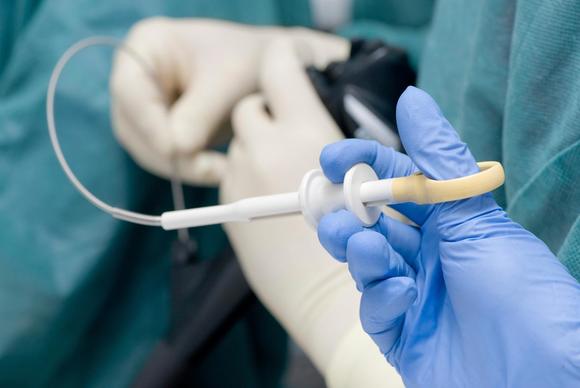
7. “The field of gastroenterology continues to advance—with more to come.”
Gastroenterology clinics may look very futuristic to some
patients and that’s because the field is exploding with new advances. “The
field combines the latest advances in endoscopic technology with advanced
medical therapies,” says Dr. Vecchio. He says patients are often surprised when
they see how much technology GI doctors use during their treatment. And there
are more potential breakthroughs on the horizon, specifically in the research
of gut bacteria. “There's a whole new field of study that’s not studying the
actual organs of the person, it’s studying the bacteria that co-habitat in the
colon,” says Dr. Forsmark. “We're discovering how, over millions of years, [bacteria
and humans] have evolved together and how important they are to us.” Experts
hope these findings can someday lead to improved diagnosis and treatment of
digestive conditions—and possibly even cures.