
View Providers
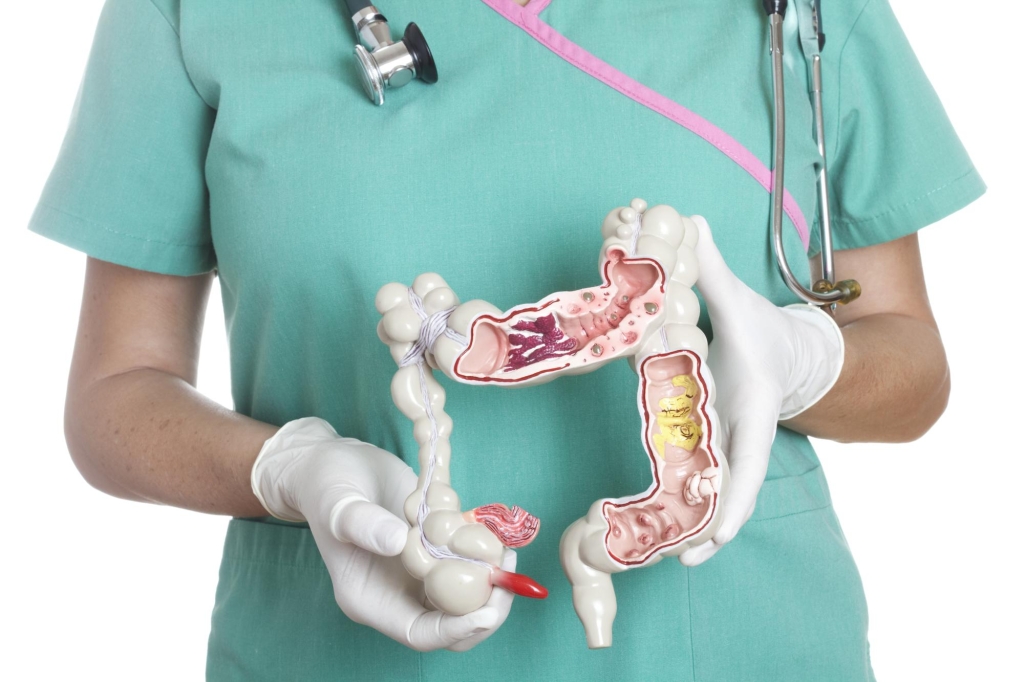
Colorectal cancer is cancer of the large intestine. The first six feet of the large intestine is the colon and the last six inches is the rectum. Cancer of the colon and rectum share many of the same features and treatments. Generally, doctors base treatment options on the stage of colorectal cancer. It is highly treatable when caught in the earliest stages. Here is a summary of the treatment options for colorectal cancer.
Surgery
Surgery removes the tumor and some surrounding healthy tissue. There are many versions, including both open and minimally invasive procedures. In early stages, it may only involve removing a small piece of the colon or rectum. Doctors may remove an entire section of intestine or rectum if the cancer is large or has spread through the lining into the intestine wall. If there isn’t enough tissue left to reconnect the ends, the surgeon will create an opening for stool to pass. This is a colostomy.
Surgery is the main treatment for all stages of colorectal cancer. In early stages, surgery has a high likelihood of cure and may be the only treatment necessary. Doctors may still recommend surgery even if colorectal cancer has spread. It can help extend life and may still offer the possibility of cure in some cases.
Radiation
Radiation therapy uses high-energy waves or particles to kill cancer cells. For colorectal cancer, doctors use either external beam or internal radiation. Internal radiation includes endocavitary therapy and brachytherapy. These therapies deliver radiation locally inside the intestine. External beam radiation delivers radiation from a machine outside the body. Three-dimensional conformal radiotherapy (3DCRT) and intensity-modulated radiotherapy (IMRT) are two very precise types that are useful for colorectal cancer.
Radiation may be necessary in later stages of colorectal cancer. Doctors can use it to shrink a tumor before surgery and to kill any remaining cancer after surgery. Focal radiation therapy can be delivered to shrink tumors that have spread to other parts of the body. It’s also useful for people who can’t have surgery. In advanced stages, radiation can help relieve symptoms, such as pain or rectal bleeding.
Chemotherapy
Chemotherapy—or chemo—uses potent medicines to treat cancer. Chemotherapy is usually a systemic treatment. This means that it goes throughout the body to kill cancer cells or stop them from growing. The common chemo drugs for colorectal cancer include an oral pill and intravenous medicines. People take chemo drugs in cycles that last for a few weeks.
Like radiation, chemotherapy may be useful in later stages of colorectal cancer. Doctors can use it to shrink a tumor before surgery and to kill any remaining cancer after surgery. They may also use it in combination with radiation. Chemotherapy can relieve symptoms and prolong life in people with advanced colorectal cancer or those who can’t have surgery.
Targeted Therapies
Targeted therapies work differently from standard chemotherapy drugs. They target specific markers that are only present on cancer cells. This often means fewer or less severe side effects and sometimes they work when standard chemotherapy does not. Targeted therapies for colorectal cancer come as an oral pill or intravenous infusions.
Doctors most often use targeted therapies for advanced colorectal cancer. However, not all tumors have the markers that these drugs use to identify and kill cancer cells. Doctors will test tissue from the tumor to see if it has the markers that would make this treatment worthwhile.
Making the Decision
Talk with your doctor about the treatment options available for the stage and location of your colorectal cancer. Other considerations include your general health, the risk of side effects, and the likelihood of curing your cancer. You may also want to get a second opinion before making a treatment decision. Your doctor should encourage this because it can help you feel confident about your final decision.
Once you’ve decided on a course of action, think about where you will receive your care. Picking a hospital or treatment center is just as important as choosing the right doctor. Find out whether the best treatment for you is available locally or not. Think about whether you are willing to travel to a center of excellence for colorectal cancer.